
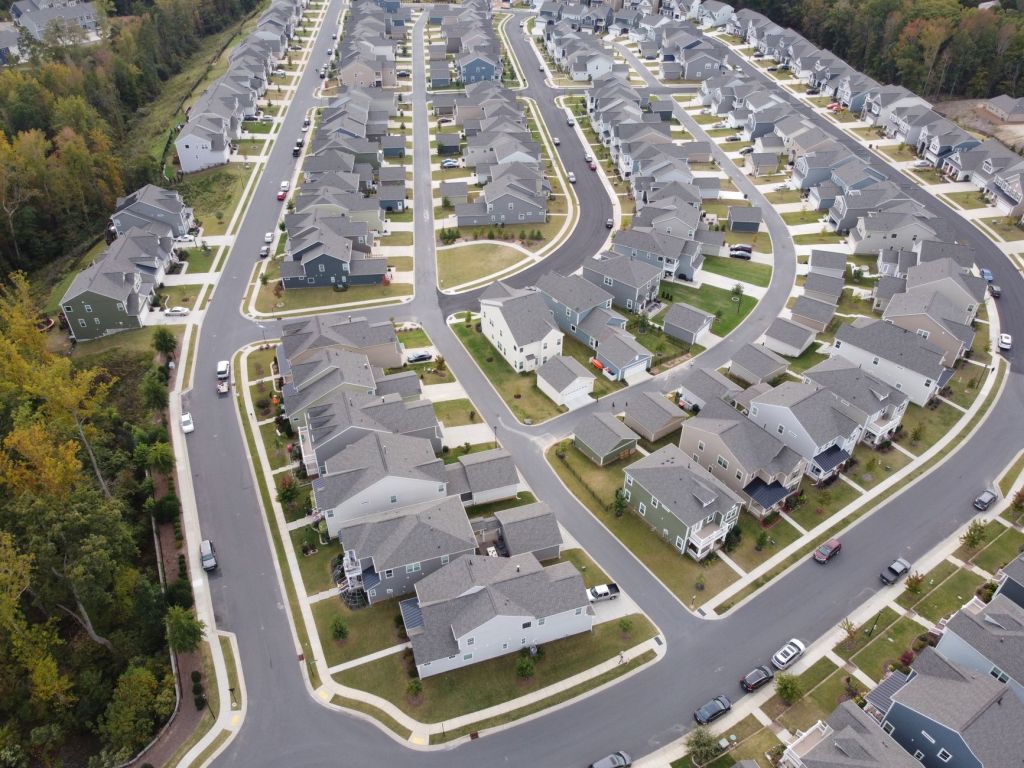
EASLEY, S.C. — New-home construction in Pickens County fell by roughly a third in 2025 and has kept sliding into 2026, as a nearly year-long moratorium on new subdivisions and larger minimum lot sizes in both Easley and the county have squeezed housing supply just as the Upstate’s population keeps growing, according to building permit data compiled by the Western Upstate Association of Realtors.
Pickens County and the city of Easley each imposed subdivision moratoriums that ran for close to a year, and both jurisdictions subsequently adopted much larger minimum lot-size requirements, according to the association’s July 8 Watchdog Report. The combination has throttled new supply in a county that includes Clemson and Easley, two of the fastest-growing pockets of the Upstate over the past five years. The lone exception was the small town of Central, where permits surged more than 500% after the town annexed a large new development — an example, the report noted, of how development can migrate toward friendlier jurisdictions rather than disappear.
The Pickens County slowdown is happening even as the broader 13-county Upstate region keeps building at a steady clip. Total housing permits across the region held at roughly 12,000 units in 2025, up about 2% from 2024, per the Realtors’ association data. But the report found the geography of that growth is shifting outward. Anderson County continues to issue 1,400 to 1,500 single-family permits a year, and permits inside the city of Anderson itself jumped 50% in 2025. Oconee County, buoyed by continued economic momentum around Clemson, saw a surge in 2025 that has carried into 2026.
Analysts at the association framed the pattern as a sprawl warning sign. Greenville County’s raw permit numbers have kept climbing, but its share of total Upstate housing production has been shrinking, while Spartanburg County has been picking up the largest share of new growth — a trend the report cautioned could be curbed by recent local elections. Anderson, Laurens and Oconee counties have all grown their share of regional housing production, a shift the association said reflects builders and buyers pushing farther from the region’s core urban counties as local rules tighten closer in.
The timing matters for a housing market already under pressure. Statewide, South Carolina’s median home price sits near $360,000 with active inventory up more than 8% year-over-year, and Greenville County alone has seen inventory climb roughly 28% to more than 5,400 active listings with a 3.7-month supply. Tighter regulation in Pickens County removes one release valve for that demand just as Greenville’s own housing production is losing relative share of the region’s growth.
For homebuilders, the moratoriums and larger lot minimums mean higher land and carrying costs concentrated in a smaller number of approved projects, likely pushing new-construction prices higher in Easley and Clemson even as some developers look to annexation deals — like the one that fueled Central’s growth — to sidestep local restrictions. For buyers, tighter supply in Pickens County could mean fewer new-construction options and firmer pricing there, while more affordable inventory increasingly appears farther out in Anderson, Laurens and Oconee counties. Investors and land buyers, meanwhile, are likely to keep following the region’s building permits outward, a pattern the Realtors’ association says is now a defining feature of Upstate growth rather than a temporary blip.


Leave a Reply