
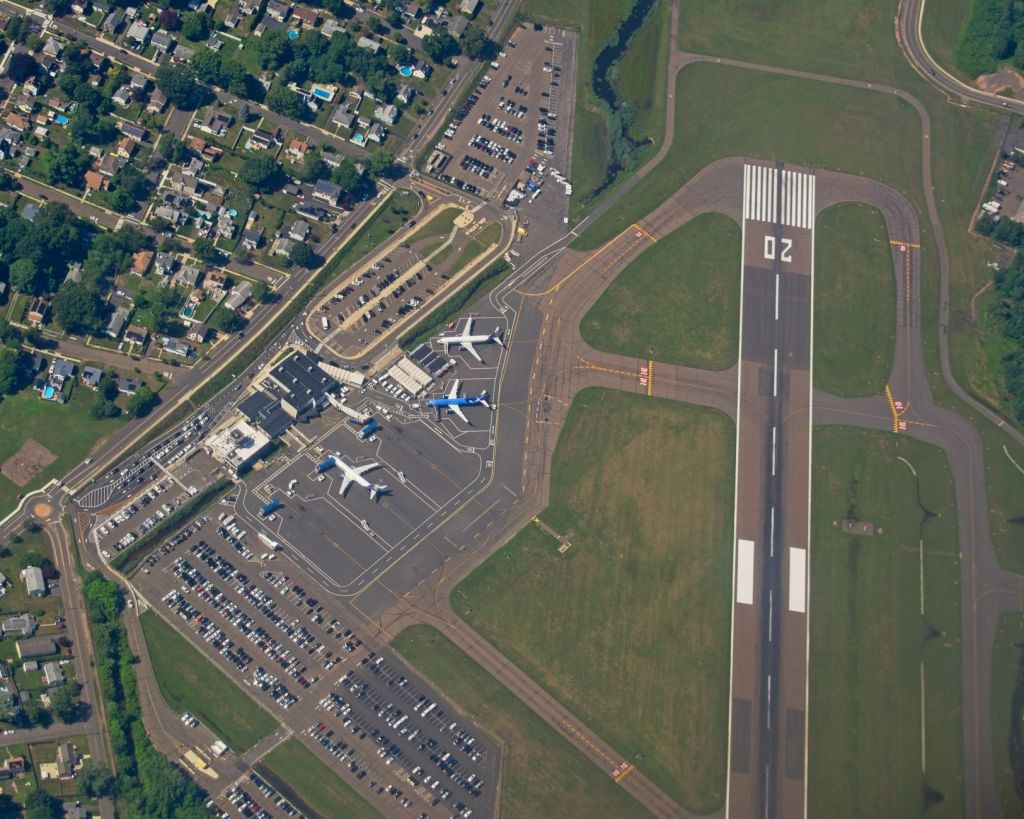
GREER, S.C. — Greenville-Spartanburg International Airport is moving forward with a $27.5 million solar canopy project that will let the terminal complex run largely on power generated on site, part of a broader wave of capital investment reshaping the region’s busiest air travel hub.
Construction of the steel superstructure over Garage B is set to begin this month, with work on Garage C to follow later in the year. The canopies, which will shade parked cars while capturing solar energy, are expected to be complete by fall 2027. The system will connect to new battery storage and the airport’s existing backup infrastructure, giving GSP the ability to run the terminal on stored solar power for up to four hours during an outage before diesel generators take over.
“By producing its own energy and storing backup power, GSP will be better equipped to maintain operations during inclement weather and power outages while reducing long-term utility costs,” the airport said in announcing the project.
Tiffany Cherry, a GSP spokesperson, said the investment is designed to protect day-to-day operations from an increasingly common set of disruptions. “This project will improve the airport’s resilience during power interruptions caused by weather, downed power lines, or grid failures, maintain critical terminal operations, and enhance customer service,” Cherry said.
The project will be installed on Garages B and C specifically because Garage A is undergoing its own renovation, converting former rental car space into additional public parking. Funding is coming through a mix of state grants, Investment Tax Credits and revenue from the Greenville-Spartanburg Airport District, the publicly appointed body that governs the airport.
The solar canopies are the latest in a string of capital projects at GSP. A new parking garage and rental car center opened at the end of 2025, and a $27 million runway rehabilitation is prompting nightly closures this summer along with two full weekend shutdowns in the fall — the first major repaving since 2009.
For commercial real estate professionals, the sustained investment at GSP is a signal worth watching. Airport infrastructure spending tends to correlate with broader logistics, hospitality and industrial activity nearby, and GSP has increasingly positioned itself as an economic anchor for the Upstate rather than simply a passenger gateway. The airport sits at the center of a corridor that has attracted billions in manufacturing and distribution investment in recent years, from BMW’s Greer plant to a steady pipeline of industrial announcements along the I-85 corridor.
The airport’s resilience push also reflects a wider trend among Upstate institutions and employers toward on-site power generation and storage, as grid reliability and long-term energy costs become bigger factors in site selection and facility planning. With runway work, garage construction and now solar infrastructure all underway simultaneously, GSP’s multi-year capital program is shaping up as one of the more significant public infrastructure stories in the region this year.


Leave a Reply