
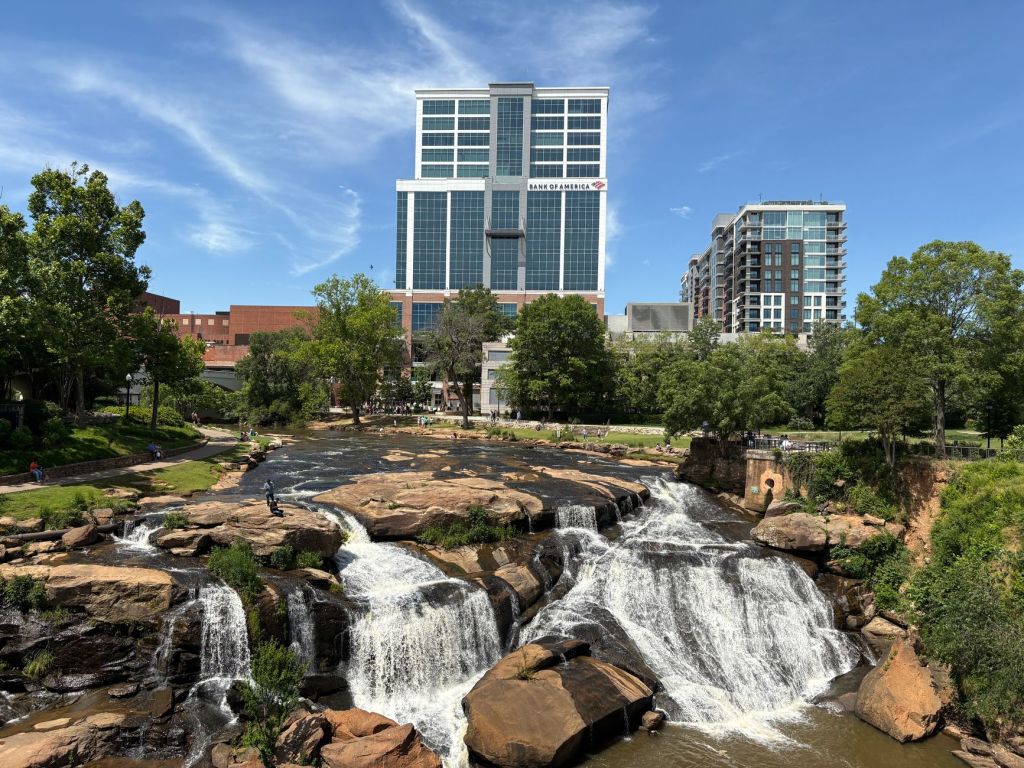
GREENVILLE, S.C. — After several years of heavy multifamily construction, Greenville’s apartment market is shifting into a tighter, slower-growth phase in 2026, with vacancy holding near 5.8% and rents up 4.2% year-over-year even as the pipeline of new units shrinks, according to a Colliers market update.
The tightening comes on the heels of a wave of deliveries. McShane Construction Company recently completed District Eastside, a 262-unit complex on a nine-acre site at Pelham and Boiling Springs roads, featuring five four-story buildings. In west Greenville, the 277-unit Markley and Maine mixed-use project near Fluor Field is adding studios through three-bedroom units, while downtown’s County Square redevelopment is set to welcome its first residents by the end of 2026 as an additional 29 townhomes are folded into the roughly $1 billion project. The McDaniel luxury condominium project is on track to deliver its first homes in late summer.
But builders are pumping the brakes. Colliers pegged the current Greenville-Spartanburg multifamily construction pipeline at roughly 2,188 units — less than a year of supply at recent absorption rates — and noted the projects still underway are concentrated mostly in downtown Greenville and Greer. That leaves suburban Class B apartment stock largely shielded from new competition, a dynamic Colliers said could allow “excess vacancy” from the last building cycle to evaporate over the next two years.
Rent growth is already reflecting that shift. The Upstate’s 4.2% annual rent growth ranks among the strongest in the Carolinas, with the steepest gains concentrated in luxury West End product and in workforce-oriented communities in Simpsonville and Mauldin, where manufacturing and automotive employment — including continued investment at BMW’s Spartanburg plant — is fueling new household formation.
The apartment squeeze is playing out against a very different backdrop in the for-sale market, where buyers have regained leverage. Greenville homes sold for a median $385,000 in June, inventory is up roughly 21% from a year ago, and the region carries a 4.7-month supply — a more balanced range than the seller’s market of recent years. Homes are taking about 52 to 59 days to sell, and properties are fetching just over 98% of asking price. With 30-year mortgage rates still hovering near 6.3%, though, many would-be buyers are staying in rentals longer, adding another layer of demand to the apartment market even as single-family inventory loosens.
For developers and investors, the message is that the easy, ground-up multifamily growth story of the past few years is giving way to an operations-focused phase — Colliers framed 2026 as less about how fast rents can rise and more about how well owners manage and position existing assets while new supply slows. For renters, that likely means fewer concessions and steadier rent increases than during the recent construction surge. For prospective buyers, the combination of loosening single-family inventory and still-elevated borrowing costs continues to make timing the decisive factor, with the Upstate’s dual-track housing market — tightening apartments, loosening for-sale supply — expected to persist through the rest of the year.


Leave a comment